

Why Students Struggle During DGCA Ground Training and How to Improve
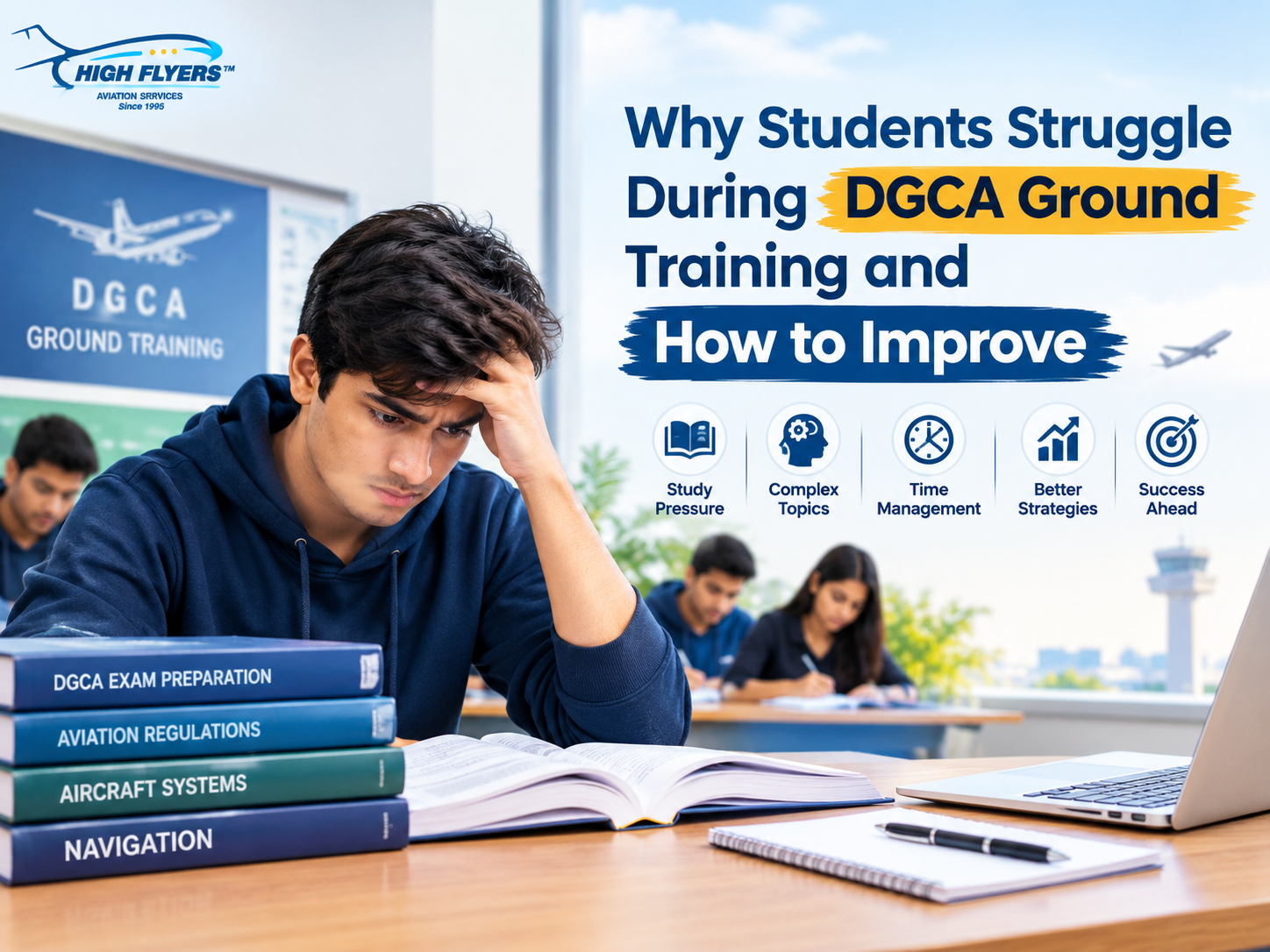
Students aspiring to become commercial pilots should train themselves in both theory and practical aspects of flying. However, there are challenges faced while preparing for the DGCA exams. This report analyses some of the common mistakes committed during DGCA ground training and suggests how the students can effectively amend their study habits to prepare for the exams with more confidence. It is well known that small inconsistent mistakes inhibit learning. The students can achieve the required level of confidence with a structured training and practice.
Knowledge about DGCA Ground Training
Commercial Pilot Training Institute in India trains students in the theoretical knowledge pertaining to the areas of pilot licensing in India. Depending on the applicable syllabus and licensing requirements, students study subjects pertaining to Air Navigation, Aviation Meteorology, Air Regulations, Technical General and other relevant subjects.
These subjects require an understanding of principles and concepts of Aviation and application of theory into practice. It is well known that regular study and understanding of each of these subjects would facilitate easy application and interpretation of theories, principles and concepts of Aviation.
How to improve: Create a weekly study timetable that covers each subject. Set daily study targets and time management goals. Make time for practice questions and review. Each week, evaluate your timetable and make adjustments.
2. Memorization
Memorizing definitions and rules is not very helpful if you don’t understand what you’re memorizing. In the end, the aim is to understand the technical aspects of Aviation Theory in order to use it to solve questions. For example, to be able to understand why certain choices were made with regards to weather conditions, one needs to understand the concept of Maritime Air Masses.
How to improve: Write out or paraphrase concepts in your own words. Read books and magazines related to your areas of interest. Seek clarification for questions you have. This improves your understanding of the topics and helps with analysis and answer writing.
3. Avoidance of Difficult Subjects
Many students tend to avoid difficult topics altogether since dealing with them takes time, effort and is frustrating. Avoiding them leads to knowledge gaps that get harder to fill close to exam time.
How to improve: If a topic is difficult for you, and your peers, don’t avoid it. Take time out to go over it. Ask your instructor, or discuss with classmates, to help you understand the topic and how to work related problems.
4. Skipping Revision
Students tend to forget what they learned in class a few weeks prior. If what you have learned is not revised it is more difficult to remember terms and regulatory concepts.
Keep one or two copies of revision notes with you at all times and revise them frequently.
How to improve: Review your class notes on the same day and return to pivotal topics throughout the week. Schedule weekly revision sessions. Keep summarized notes on key formulas and concepts and areas where you require more practice.
3. Not Practising Enough Questions
Students should be doing question practise outside the classroom. Regular practise helps students time manage and identify weaknesses.
How to improve: Practice questions at the end of each topic. Make use of different practice tests and assess your understanding while identifying regular errors. Review and understand the reasoning behind the questions you get wrong.
Students should consult the latest DGCA information bulletin to cross-check if there are any changes in the licensing syllabus and applicable exams.
4. Poor Time Management
Time management becomes a challenge as students attempt to juggle several commitments including ground classes, self-study, revision and personal time. Some students put off assignments or wait till the last minute to do serious study for an exam.
How to improve: Set specific study hours for the week and stick to the plan. Break up larger study sessions with frequent breaks. Study all subjects but prioritize important topics.
Compare your progress with that of previous weeks and ensure that you practice consistently.
5. Hesitating to Ask Questions
Students feel that they may seem stupid for asking questions. However, by clearing your doubts, you are setting yourself up for more advanced concepts and topics.
Ask the questions that you have and reach out to clear your doubts.
How to Improve: Maintain a list of doubts and discuss them during class or doubt clearing sessions. Participate in discussions and review your explanations. Asking questions is crucial for understanding a concept and building a foundation.
8. Ignoring Official Updates & Study Requirements
Best Pilot Training Institute in India does adhere to the requirements of the DGCA and Government of India, and regulations governing civil aviation examinations. Relying on old notes or unofficial information available on the internet may create ambiguity regarding the current syllabus, examination format and conditions, and eligibility.
How to Improve: Keep a close eye on DGCA notifications and updates. Regularly review the information to ensure your study materials align with the latest required syllabus. When you are uncertain about a requirement, consult an authorized source rather than unverified or informal ones.
How to Improve Your DGCA Ground Training Performance
Consistent habits facilitate improved results
- Regular Class Attendance: Being in class helps with syllabus alignment and clarification of difficult concepts.
- Review Your Notes Daily: Review important topics before they become long-term memory.
- Regularly Practice Numerical Problems: Concepts involving calculations and skills require frequent repetition and clarity regarding concepts.
- Use Updated Study Resources: Choose study aids that are congruent to the required syllabus.
- Take Mock Tests: Time bound practices help you evaluate your preparation and test your exam strategies.
- Analyze your Mistakes: Keep record of mistakes and pay special attention to areas you are unfamiliar with.
- Follow a Healthy Schedule: Enough sleep and breaks and a balanced schedule helps you stay focused.
The aim is to study correctly and consistently. It is important to acknowledge your errors and address them before they become habits.
Choosing the Best Pilot Training Institute
Students should research the course structure, faculty, teaching methods, study resources, support to clarify doubts, and the arrangements made for training in an institute before making a choice.
It is important for prospective candidates to check the approvals/recognitions for the services provided by an institute to validate its claims. Ground training and flight training are two different services, and candidates should understand the services offered by the institutes before enrolling in training.
The High Flyers provides information on pilot training and prepares candidates for their career in aviation. Before enrolling in training, candidates should carefully evaluate the available options, ascertain their requirements, and enroll in training that is aligned to their career goals and learning needs.
Tips to Remain Motivated While Undergoing DGCA Ground Training
Aviation education sometimes involves learning concepts that are completely new to students. Concepts involving a lot of new information can be disheartening and demotivating. The key, however, is consistent effort. Set small, measurable goals and reward yourself for each goal achieved.
Remain focused during group discussions and involve yourself only if it is likely to improve your understanding of the concepts.
Remember that becoming a pilot is a long process and ground training is a crucial part of building the knowledge required for a career in professional aviation.
Frequently Asked Questions
1. What reasons do students have for struggling during the DGCA ground training?
Insufficient planning, lack of conceptual clarity, inadequate practice of questions, poor time management and ineffective use of revision time are some of the reasons students find difficult to cope with.
2. How many hours should I study daily for DGCA ground classes?
There is no set limit on the number of hours you should study daily. However, it is important that you set time every day for classes and revision, practice questions and mock tests.
3. How do I prepare adequately for DGCA exams?
Concentrate on the applicable syllabus. Attend classes regularly. Revise and practice questions. Take mock tests and review your mistakes. Check the DGCA website for the latest information.
4. How do I choose a suitable pilot training institute in India?
Check the course structure, the instructors, the learning resources, and the student support. Check the fees and approvals. Also verify if the institute has ground facilities and flight facilities or both.
Conclusion
Recognizing Common Mistakes During DGCA Ground Training provides aspiring pilots insight into the pitfalls of ground training and facilitates better planning and time management. While rote learning isn’t unheard of in other streams of education, it is especially true in aviation. Time management and effective planning are crucial to the success of an aviation student. It is especially important for ground training, where the majority of students find the course too lengthy and filled with repetitive, obscure details.
Preparation can be strengthened by strictly adhering to a time table, practicing regularly, and asking questions. Most importantly, students should become familiar with the latest information released by the DGCA. The High Flyers firmly believe that students should apply the same discipline and patience that is required of them in ground school to their planning and preparation for achieving their aviation goals.