
DGCA Pilot Training Requirements Every Student Should Know
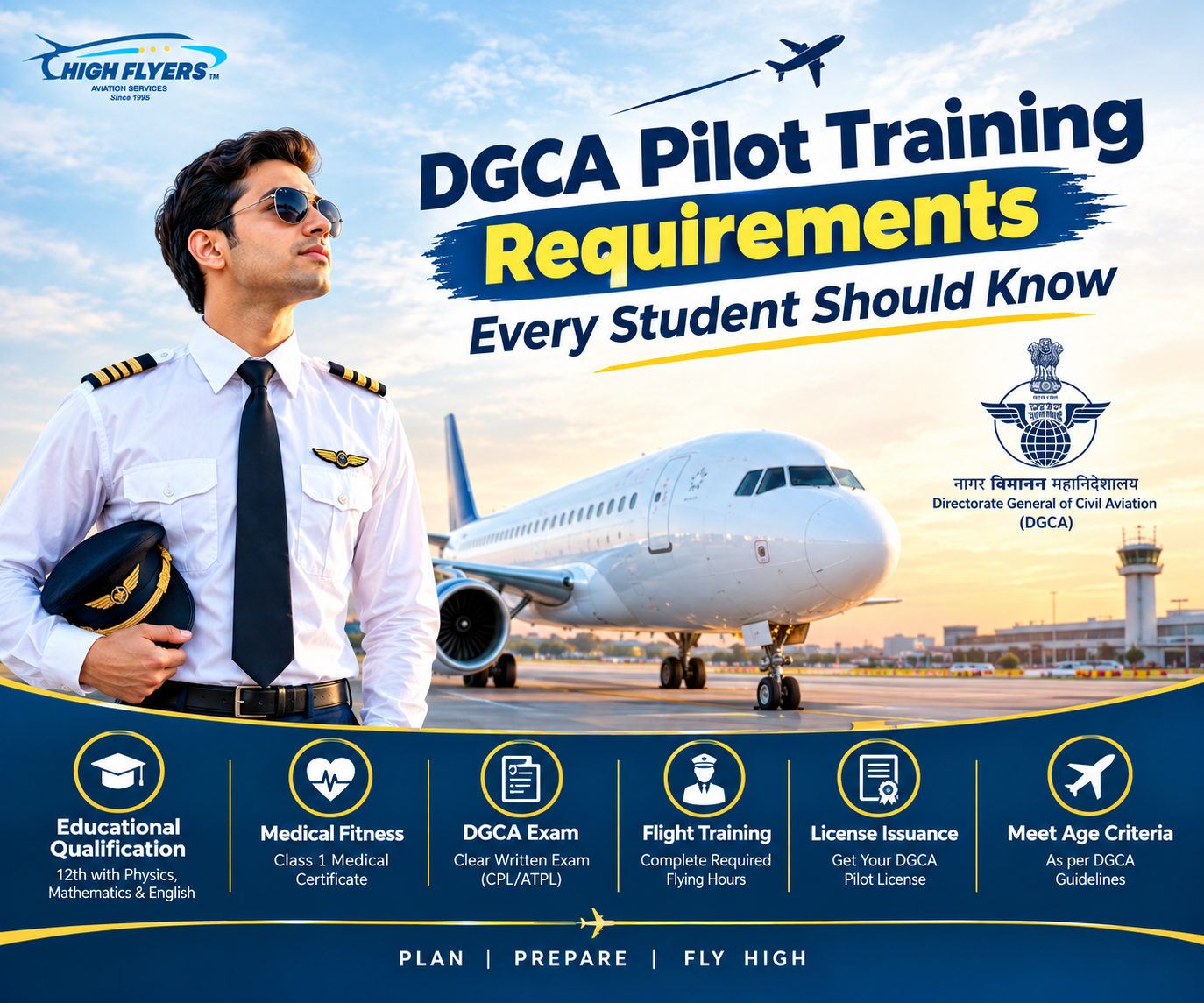
Being a pilot is the dream of many people who are passionate about aviation and love flying. However, Indian students need to understand the Pilot Training Requirements of the Directorate General of Civil Aviation (DGCA) before they invest money and time on flight training. The DGCA regulates Civil Aviation in India and also sets standards for pilot licensing and training in India. It is in the best interest of an aspiring pilot to be aware of these standards and requirements early so that they can plan their training accordingly and be prepared for examinations. Being aware of the best pilot training institute in india enables one to make the right choices for their career in Aviation.
Pilot Training Requirements
The DGCA is responsible for regulating pilot licensing and training in India. Persons seeking to take up a career as commercial pilots in India need to fulfill the requirements specified by the DGCA and go through relevant trainings, examinations and licensing.
The requirements for different types of pilot licenses are different and therefore training for the same is different.
It is imperative that students wishing to take up a career in flying and aspiring to become commercial pilots, understand the latest DGCA regulations. They should also ensure that the training organization and training facilities they choose for flying training meet the required regulatory standards.
1. Educational Qualifications Required for a Pilot Career in India
Class 12 with Physics and Mathematics
In India, for the standard commercial pilot training route, it is required that candidates have passed Class 12 with Physics and Mathematics from a recognized board, or attained the equivalent qualification.
Students who have not studied these subjects at school may be able to study these subjects through a recognized board, subject to the relevant eligibility conditions. They must ensure that their qualifications will be accepted for the relevant licence before they take this step.
Knowledge of these subjects will help students understand more about aviation, including navigation, aircraft performance, and principles of flight, as well as basic meteorology.
Is There an Age Requirement?
Age requirements differ for each licence. In India, the minimum age requirement is 17 years for a Student Pilot Licence and 18 years for a Commercial Pilot Licence. Students must find out the current requirements for the licence they are interested in, and the training pathway.
It is always useful to plan ahead in order to prepare academically, medically and psychologically for the requirements at the various stages.
2. DGCA Medical Fitness Requirements
There are several aspects of medical fitness for a pilot. Students must have the physical and mental strength to perform safety-critical duties and function effectively in changing flight conditions.
Class 2 Medical Assessment
For many students starting a career in aviation, understanding their fitness for the career through a Class 2 medical assessment, is an early step in the process. This medical assessment is to evaluate their fitness against the relevant medical standards for the training or licensing process.
Class 1 Medical Assessment
Candidates should be aware of medical requirements, and complete necessary evaluations through approved medical process.
Medical evaluations may include vision, hearing, cardiovascular, general fitness, etc. Candidates should not assume that passing a Class 1 medical assesment is sufficient for meeting the medical requirement for a license.
Tip: Check the current DGCA medical process. Early preparation may identify eligibility issues before a major financial commitment is made to pilot training.
3. DGCA Examinations & Ground Classes
Passing required examinations is a significant part of pilot training. Adequate understanding of theory is important in order to apply it during flight training.
Exam syllabus may include subjects such as
- Air Regulations
- Aviation Meteorology
- Air Navigation
- Technical General
- Technical Specific
- Radio Telephony
Students are required to confirm the latest DGCA exam syllabus and requirements through the DGCA website as rules, syllabus, and exam processes may change.
Why are DGCA Ground classes important?
Theory classes assist students to acquire knowledge required for a pilot’s licence. Well structured classes and regular assessments help students in understanding the subject matter.
While evaluating pilot training organisations, students should ensure that training organisation has a clear syllabus, and qualified and experienced instructors. As understanding the theoretical subject matter of aviation is of prime importance, students should study the subject regularly, and maintain practical application of the subject.
4. Choosing the Right Flight Training Academy
Once students understand the academic and medical requirements, they can begin evaluating flight training options. Selecting the right academy is important, as quality training is dependent upon several factors including: availability of aircraft, weather, scheduling and cost.
What Should Students Check?
Students are advised to evaluate the following before enrolling:
- Meeting of regulatory requirements.
- Condition and availability of training aircraft.
- Experience, qualification and training procedures of instructors.
- Safety and maintenance procedures.
- Flight hour planning and the likely training schedule.
- Additional costs, travel, and accommodation.
- Licensing and documentation support.
When comparing flight training institutes in India, students should focus on the factors mentioned above rather than relying on advertisements. Students are encouraged to request a written breakdown of costs, additional costs and fees, and the terms governing refunds and delays.
The High Flyers can assist students in understanding the process and preparing to pursue a career in aviation, as well as the factors to consider when selecting a training pathway.
5. Complete the Required Flight Training
Completion of the required commercial pilot training institute in India not only reinforces theories learned on the ground but also helps develop essential skills required to fly an aircraft safely and efficiently.
The instructors design training in accordance with the approved syllabus to ensure that students develop their flying skills progressively. Each flight session helps students improve their skills in ground control, take-offs, landings, flight operations, and emergency procedures.
Flight Training and Experience Requirements
CPL candidates must complete the flight training and experience requirements as prescribed. Their flight time, experience categories, and documentation must comply with current DGCA standards.
Students must monitor their training progress closely and collaborate with their academy to ensure they complete all necessary training. Flight training time can vary for many reasons, including weather conditions, regulatory and administrative factors, and the availability of training and examining aircraft.
Understanding CPL Licensing Requirements
Students must understand the CPL application process, meet the educational and age requirements, complete the required medical examinations, and fulfil the flight training and experience requirements. Candidates may also need to meet additional licensing requirements, including language proficiency and radio telephony standards.
Students should maintain organised records of their academic qualifications, medical assessments, examinations, training, and identification documents. Before submitting a licence application, candidates should verify the latest requirements and procedures with the DGCA.
Choosing the Right Flight Training Academy
Compare regulatory compliance, training quality, safety procedures, total costs, and aircraft availability when selecting a training academy. Prior experience in the training industry can help prospective students identify an academy that prioritises student safety and welfare and provides appropriate training rather than relying on exaggerated promotional claims.
Steps to Prepare for Your CPL
-
Complete flight training: Gain the necessary flying skills and experience through an appropriate training programme.
-
Meet licensing requirements: Fulfil all applicable examination, medical, flight experience, and documentation requirements.
-
Plan your aviation career: Identify opportunities related to your licence and determine whether your preferred role requires additional qualifications.
Careful planning, consistent training, and accurate documentation can help students navigate the CPL process and prepare for their future aviation careers.
Frequently Asked Questions
1. What are the main DGCA Pilot Training Requirements in India?
The main requirements vary with the licence.For the CPL route, candidates must meet the educational and medical requirements, pass the required examinations, complete flight training and gain the necessary experience, and submit all required documents.
2. Can I become a commercial pilot after Class 12?
Yes. After Class 12, one can appear for the commercial pilot examinations if one is fulfills other eligibility requirements including the educational qualifications in Physics and Mathematics, medical standards and other licensing conditions.
3. Is a Class 1 medical assessment necessary for a CPL?
Generally, yes. Candidates should cross-check the DGCA’s current medical eligibility requirements.
4. How long does it take to finish commercial pilot training?
The answer depends on a number of variable conditions including, but not limited to, student progress, training schedules, weather, availability of aircraft, preparation for examinations and administrative processing. It is recommended that students request a realistic training timeline from their academy as guaranteed completion dates cannot be provided.
Conclusion
Familiarization with the Regulations of the Directorate General of Civil Aviation (DGCA) of the country in which the training will take place, will provide valuable information for any aspiring pilot. Students should strengthen their academic knowledge, check their medical eligibility, prepare for examinations, and carefully compare flight training academies before choosing one.
Incorporating a structure in planning and training will help the student pilot manage his/her time and finances in the most efficient way. Analyzing and understanding the current DGCA Rules will allow students to plan their route and procedures to achieve their commercial pilot license.